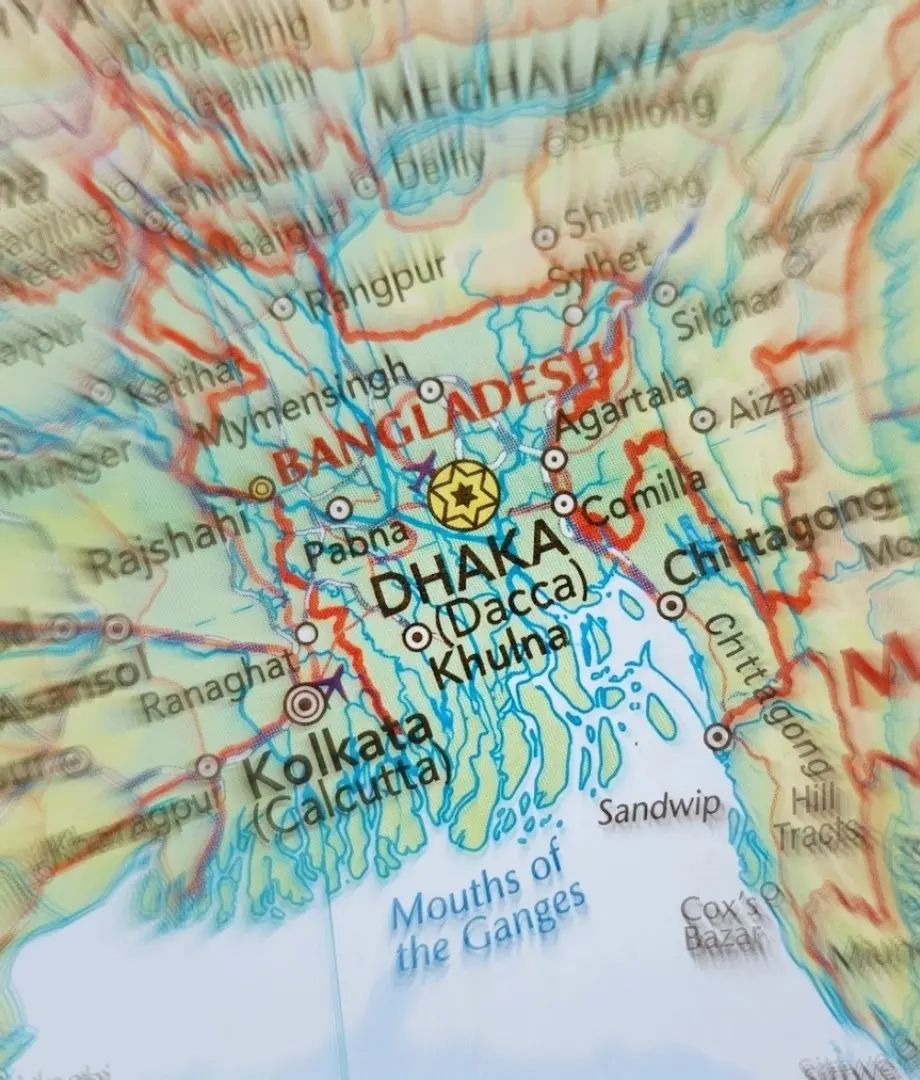

Explore the Most Famous Tourist Attractions and Must-Visit Places in Dhaka City
If you have ever tried explaining Dhaka to someone who has never been, you already know how difficult it is. It is loud, it is layered, and it is unlike any other city in the world. There is a certain energy here that you simply cannot find anywhere else, a mix of centuries-old history, deep national pride, and a pace of life that never quite stops.
But here is the thing. Whether you are landing in Dhaka for the first time or coming back after years away, there are places in this city that you absolutely cannot skip. Not because a travel blog told you so, but because these are the places that actually define Dhaka. The ones that tell you who we are, where we came from, and what we stand for.
This is not a list of hidden gems or neighbourhood secrets. This is the list you refer to when you want to see Dhaka properly. Let's get into it.
The Historic Landmarks of Old Dhaka
1. Lalbagh Fort
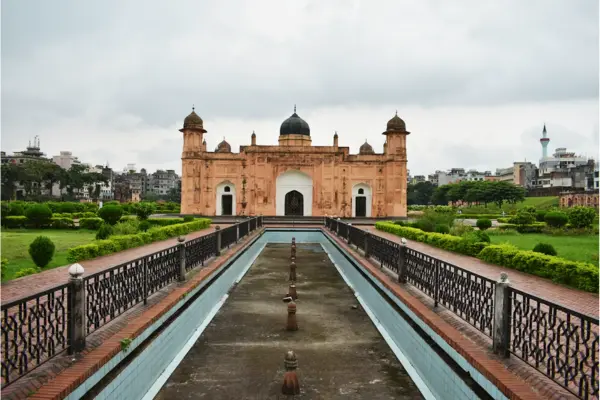
If Dhaka has a crown jewel from the Mughal era, Lalbagh Fort is it. Built in the late 17th century by Prince Muhammad Azam, the son of Emperor Aurangzeb, this fort sits in the heart of Old Dhaka and carries centuries of history within its walls.
What makes Lalbagh so special is not just its age. It is the stories. The fort was never fully completed, reportedly because of the death of Pari Bibi, the daughter of Governor Shaista Khan, whose tomb sits inside the complex to this day. That sense of something unfinished, something halted mid-story, gives the place a hauntingly beautiful quality.
What to see inside:
-
The Tomb of Pari Bibi, beautifully decorated and deeply moving
-
The Mosque of Shaista Khan, still standing in excellent condition
-
The Lalbagh Fort Museum, housing Mughal-era weapons, coins, and manuscripts
Practical tip: Visit in the morning, around 8 or 9 am. The light is golden, the heat is bearable, and the crowds have not yet arrived. Entry is very affordable.
2. Ahsan Manzil Museum (The Pink Palace)
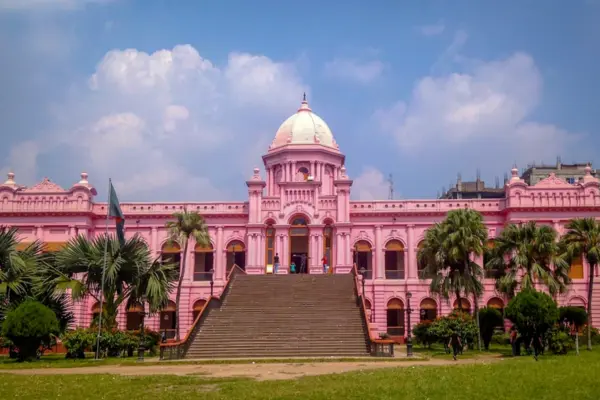
There are buildings you visit, and then there are buildings that stay with you. Ahsan Manzil is the second kind.
Painted in its signature dusty rose and standing right on the banks of the Buriganga River, this former palace of the Nawabs of Dhaka is arguably the most recognisable heritage building in the entire country. It was built in the 19th century and served as the official residence and seat of the Nawab family for generations.
Today it operates as a museum, and stepping inside is like stepping into a different world entirely. The grand staircases, the period furniture, the oil portraits of the Nawabs, all of it paints a vivid picture of elite Bengali life before Partition.
Before you visit:
-
The museum is closed on Tuesdays
-
There is a small entry fee, well worth it
-
The riverside garden outside is one of the best spots in Old Dhaka for photography, especially in the late afternoon
Worth Reading: How to Travel from Dhaka to China
Spiritual and Cultural Landmarks
3. Baitul Mukarram National Mosque
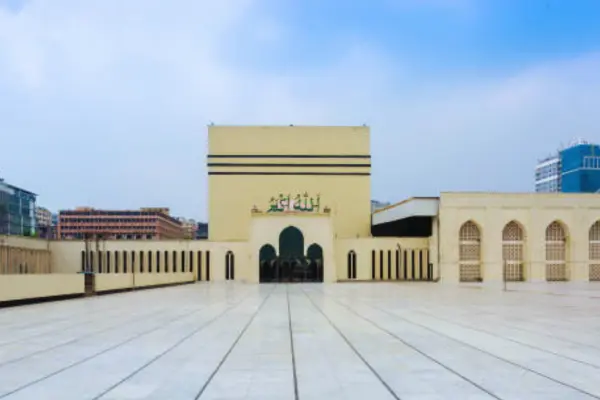
Bangladesh is a country where faith runs deep, and Baitul Mukarram is its most important symbol of that faith. Completed in 1968, the National Mosque of Bangladesh is one of the largest mosques in the world and a major architectural landmark in the heart of Dhaka.
Inspired by the design of the Kaaba in Mecca, the mosque has a clean, cubic structure that is both modern and deeply spiritual in its feel. On Fridays and during Eid, it draws tens of thousands of worshippers, and the sight of that gathering is something genuinely powerful.
Even if you are visiting purely as a sightseer, the mosque and its surroundings are worth a stop. Do dress modestly and be respectful of the space.
4. Tara Masjid (Star Mosque)
If Baitul Mukarram represents faith in its grandest, most monumental form, Tara Masjid represents it in its most intricate and breathtaking form.
Tucked inside the lanes of Armanitola in Old Dhaka, the Star Mosque gets its name from the star-shaped mosaic patterns that cover its exterior. The entire facade is decorated with Chinese porcelain tiles, creating a visual that is genuinely unlike anything else in the country. It is the kind of place where you walk in expecting a mosque and walk out having seen a work of art.
You do not need to be religious to appreciate what this place looks like. Just go. And take your camera.
5. Dhakeshwari National Temple
Bangladesh's cultural identity has always been about more than one community, and Dhakeshwari National Temple stands as a beautiful reminder of that. As the national temple of Bangladesh, it is one of the oldest and most significant Hindu temples in the country, and it holds a place of deep importance in the country's broader spiritual and cultural landscape.
The temple complex is calm, well-maintained, and genuinely peaceful in a way that feels like a world away from the busy streets just outside. If you visit during Durga Puja, you will witness the complex transform into something colourful, joyful, and deeply moving.
It is also conveniently located near Lalbagh Fort, making it easy to pair both visits in a single Old Dhaka day trip.
Worth Reading: Travel Hack for Smart Travellers
National Symbols Worth Every Minute
6. Central Shaheed Minar
There are places you visit for leisure, and there are places you visit because they matter. The Central Shaheed Minar is the latter.
Built to honour the martyrs of the Language Movement of 1952, this monument is one of the most emotionally significant landmarks in all of Bangladesh. On 21st February, which is now recognised globally as International Mother Language Day, thousands of people walk barefoot to this monument in the early hours of the morning to lay flowers and pay their respects.
Even on an ordinary day, standing here and understanding what this monument represents gives you a different kind of feeling. It is quiet, dignified, and deeply important. Any visitor to Dhaka who skips the Shaheed Minar has missed something essential about understanding this country.
7. Bangladesh National Parliament (Jatiya Sangsad Bhaban)
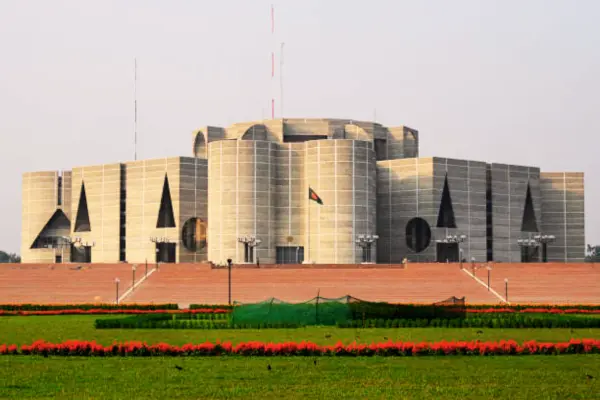
This one is in a category of its own.
Designed by the legendary American architect Louis Kahn and completed in 1982, the Bangladesh National Parliament building is considered one of the greatest works of 20th-century architecture in the world. It is studied in architecture schools globally, written about in design journals, and visited by architects and travellers from across the world.
And it sits right here in Dhaka.
The way the building plays with light and water, the geometric boldness of its design, the sheer scale of it, all of it makes this a landmark that holds its own against anything you would see in Rome, London, or Washington. It is, without exaggeration, one of the most remarkable buildings on the planet.
The complex is best admired from outside, particularly from across the lake, where the full scale of the structure becomes visible. Visit in the late afternoon for the best light.
Worth Reading: Dhaka to Chittagong Air Ticket Price
For the Curious and the Conscious
8. Liberation War Museum
This is not a leisurely visit. It is an important one.
The Liberation War Museum tells the story of Bangladesh's 1971 War of Independence through photographs, documents, personal testimonies, and artefacts. For every Bangladeshi, it is an emotionally heavy experience. For anyone visiting from outside the country, it is an essential history lesson about a genocide the world largely looked away from and a people who fought, and won, against impossible odds.
Take your time inside. Read the names. Look at the photographs. Let it sit with you.
This is not just a museum. It is a testament to what this nation endured and what it chose to become.
A Different Kind of Day Out
9. Bangladesh National Zoo
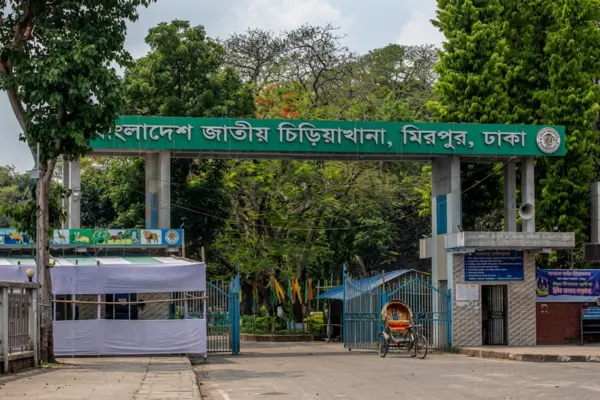
After all the history and heritage, sometimes you just want a different kind of afternoon. The Bangladesh National Zoo in Mirpur is the largest zoo in the country and covers over 186 acres of land, housing hundreds of species of animals, birds, and reptiles.
It is a great option for families with children, and on weekends it draws a lively, cheerful crowd that gives you a warm slice of how Dhakaites like to spend their leisure time. The grounds are spacious enough for a proper walk, and the variety of animals on display is genuinely impressive.
Practical tips:
-
Go on a weekday if you want a quieter experience
-
Carry water and snacks, especially if you are visiting with children
-
The zoo opens in the morning and closes in the late afternoon, so plan accordingly
10. Armenian Church of the Holy Resurrection
Not many people know this, but Dhaka was once home to a thriving Armenian community. Merchants who settled here centuries ago left behind a remarkable piece of history in the heart of Old Dhaka, the Armenian Church of the Holy Resurrection.
Built in 1781, this church is one of the oldest in Bangladesh and one of the few surviving reminders of the Armenian presence in this part of the world. The building itself is quietly stunning, with a classic colonial facade, a peaceful courtyard, and a cemetery that holds the graves of Armenian settlers dating back hundreds of years. Reading those gravestones alone feels like uncovering a chapter of Dhaka's history that most people never knew existed.
It sits not far from Ahsan Manzil, so it slots in naturally as part of any Old Dhaka heritage walk.
Worth Reading: 12 Places to Visit in Cox’s Bazar
What makes it special:
-
One of the oldest churches in Bangladesh, built in 1781
-
A beautifully maintained colonial-era building in the middle of bustling Old Dhaka
-
The surrounding cemetery carries inscriptions dating back to the 18th century
-
A genuinely surprising and moving stop for any curious visitor
Before You Go: A Few Handy Tips
-
Best time to visit Dhaka: October to March, when the weather is cooler and far more comfortable for outdoor sightseeing
-
Getting around: Use Pathao or Uber rather than roadside CNGs, especially if you are new to the city
-
Old Dhaka in one day: Lalbagh Fort, Ahsan Manzil, Tara Masjid, and Dhakeshwari Temple can all be covered comfortably in one full day
-
Carry cash: Most entry points and street food stalls do not accept cards
-
Eat while you are there: You cannot do Old Dhaka without trying the biryani. It is not optional
Planning to travel beyond Dhaka? Whether it is a weekend trip to Cox's Bazar, a flight to Chittagong, or an international journey, check out ShareTrip for flights, hotels, and tour packages. It is Bangladesh's leading travel platform and takes the stress out of planning entirely.
Frequently Asked Questions
Q1. What is the best time of year to visit Dhaka?
October to March is the ideal window. The weather during these months is significantly cooler, making it far more comfortable to walk around outdoor landmarks like Lalbagh Fort, the Shaheed Minar, and the National Parliament. The monsoon season from June to September can disrupt outdoor sightseeing due to heavy rainfall and waterlogging.
Q2. Which area has the highest concentration of historical places?
Old Dhaka, or Puran Dhaka, is the most historically dense part of the city. Lalbagh Fort, Ahsan Manzil, Tara Masjid, and Dhakeshwari Temple are all within close proximity, making it the ideal starting point for any heritage tour of the city.
Q3. Are these places suitable for families with children?
Yes, most of them are. The National Zoo is particularly great for younger children. Ahsan Manzil, Lalbagh Fort, and Hatirjheel are comfortable for families as well. The Liberation War Museum is more suited to older children and adults given the weight of its content.
Q4. How many days do you need to see Dhaka properly?
Two to three days is a comfortable amount of time. Spend one full day in Old Dhaka covering the historical and religious landmarks, one day for the national symbols and museums, and a half day for the zoo or any leisure spots you want to add.
Q5. Is Dhaka safe for visitors and tourists?
Generally, yes, particularly during daylight hours. Use Pathao or Uber for transport rather than roadside CNGs for convenience and safety. In busy areas like Old Dhaka, keep your belongings secure. As with any large city, a little common sense goes a long way.
Final Thoughts
Dhaka is not the easiest city to navigate. But it is one of the most rewarding ones to actually know. Every one of the places on this list has something to say about who we are as a country, where we came from, and what we value. That is not something every city can offer its visitors.
So, which of these places are you planning to visit first?


