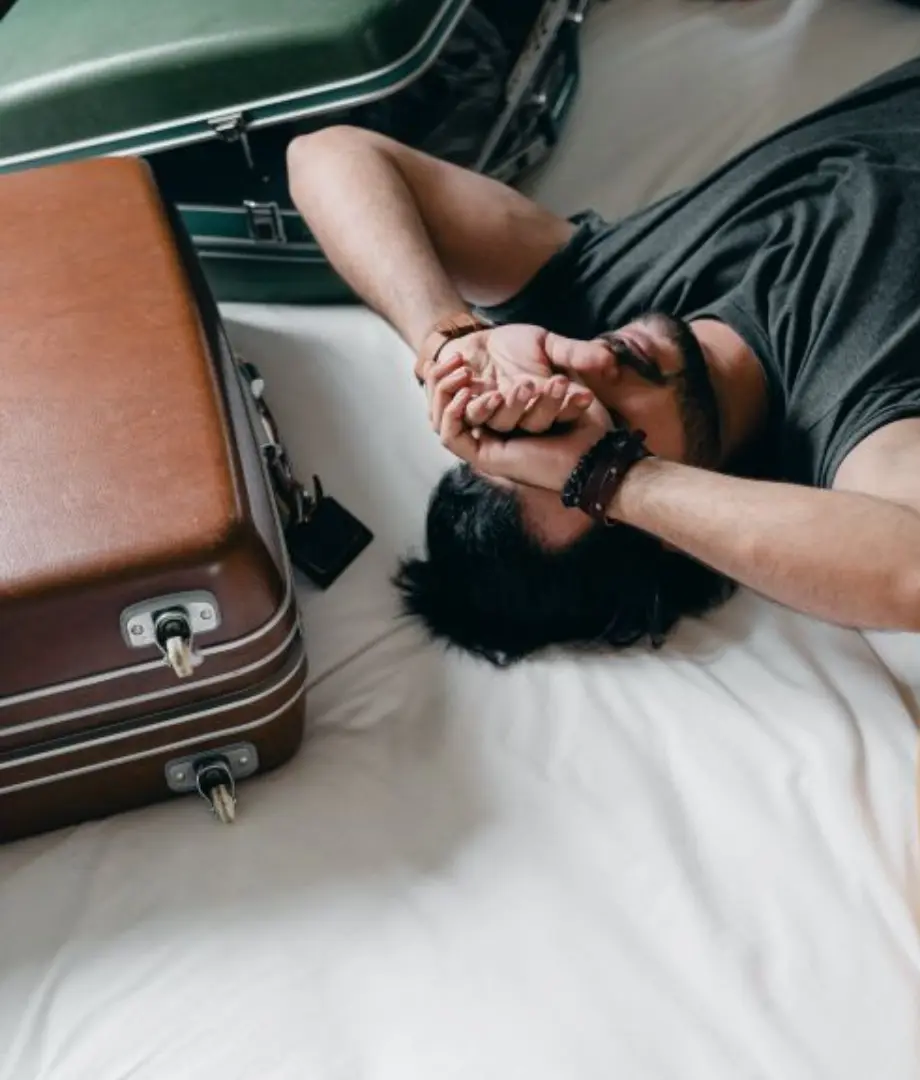

You stepped off a long flight, dragged your suitcase through arrivals, and finally made it to your room. It is two in the afternoon. The sun is out. But your body? Your body is absolutely convinced it is three in the morning and wants nothing more than to lie down on the floor and sleep for twelve hours.
Sound familiar?
That heavy-limbed, brain-fogged, completely-off feeling after crossing multiple time zones is jet lag. And if you have taken a long-haul international flight from Dhaka to London, Dubai, Singapore, or anywhere that puts a serious chunk of the globe between you and home, you have almost certainly been there.
The good news is you do not have to simply wait it out. Knowing how to deal with jet lag after travel is largely about working with your biology rather than against it. And there are strategies, genuinely science-backed ones, that can cut your recovery time in half.
Now let us get into the details.
What Exactly Is Jet Lag?
Jet lag is not just general tiredness from a long journey. It is an actual sleep disorder, clinically classified as a circadian rhythm sleep-wake disorder by the American Academy of Sleep Medicine. It happens when your body's internal 24-hour clock, called the circadian rhythm, falls out of sync with the local day and night cycle at your destination.
Simply put, your body is still running on Dhaka time while you are standing somewhere else entirely.
According to the CDC Yellow Book (2026 edition), jet lag is one of the most common health challenges for international travellers. A recent survey cited by the CDC found that 68% of international business travellers experience negative jet lag symptoms on a regular basis. So if you feel like a walking zombie after crossing several time zones, you are in very good company.
Why Does Jet Lag Happen After a Long Flight?
Understanding what is happening inside your body makes the recovery strategies feel a lot less random.
Your internal clock is controlled by a tiny region of the brain called the suprachiasmatic nucleus (SCN). The SCN responds to light and darkness signals from your environment and uses them to regulate sleep, hormone release, digestion, body temperature, and mood, all at once.
When you fly across multiple time zones rapidly, the SCN does not get the memo. It keeps running on your home schedule. Meanwhile, your new environment is sending completely different signals. The result is a mismatch between what your body expects and what is actually happening around you. That mismatch is what jet lag feels like.
Here is something most people do not know: the human circadian rhythm does not actually run on exactly 24 hours. Research shows the average cycle is closer to 24.2 hours. That slight extra length is the reason most people find westward travel easier than eastward travel. Your body is naturally built to stay up a little later. Being told to fall asleep earlier is the harder task.
And jet lag does not just disrupt sleep. Research from 2025, drawing on data from 1.5 million nights of sleep tracking, confirms that jet lag affects digestion, hormone levels, cognitive performance, mood regulation, and immune function simultaneously. That foggy, irritable, off-your-food feeling after a long international flight is entirely physical. It is your biology trying to catch up.
What Are the Common Symptoms of Jet Lag?
Jet lag shows up differently for different people, but the core experience is consistent. Here is what to look out for:
Physical symptoms:
- Extreme daytime fatigue and sleepiness
- Difficulty falling or staying asleep at night
- Headaches
- Digestive discomfort, including nausea, bloating, constipation, or loose stools
- General body heaviness and aching muscles
Mental and emotional symptoms:
- Brain fog and difficulty concentrating
- Memory lapses and slower decision-making
- Irritability and mood swings
Symptoms typically begin within one to two days of landing. Their severity depends largely on how many time zones you crossed and which direction you flew. According to the Cleveland Clinic, most people who cross five or more time zones will experience at least some of the above.
One pattern worth knowing: Many travellers feel fine on the first night after landing, only to feel dreadful by day two or three. That is completely normal. The physical fatigue of the journey itself can mask jet lag on night one. Once that fatigue wears off, the real circadian disruption becomes apparent.
How Long Does Jet Lag Last After Travel?
This is one of the most common questions travellers ask, and the answer is more precise than most people expect.
The general rule: Jet lag lasts approximately one day for every time zone crossed. But the direction you flew matters considerably.
|
Time Zones Crossed |
Direction |
Typical Recovery Time |
|
2 to 3 |
Either direction |
2 to 3 days |
|
4 to 5 |
Westward |
4 to 5 days |
|
4 to 5 |
Eastward |
5 to 7 days |
|
6 to 9 |
Westward |
6 to 8 days |
|
6 to 9 |
Eastward |
7 to 12 days |
Sources: Sleep Foundation, WorldlyCalc circadian research
For travellers flying out of Dhaka, this translates into real numbers. Flights to Dubai cross roughly two time zones westward, so most people recover within two to three days. Flights to London cross five to six time zones westward, meaning recovery typically takes close to a week. Flights to New York or Los Angeles cross ten to eleven time zones, and that is where jet lag becomes genuinely significant, with full recovery sometimes taking ten days or more.
12 Practical Ways to Deal With Jet Lag After Travel
You do not have to simply grit your teeth and wait. The right strategies, applied at the right time, can cut your recovery window significantly. Here is what the science actually supports.
1. Switch to Local Time the Moment You Land
This sounds obvious, but most travellers only do it halfway. They set their watch to local time but keep mentally converting back to what time it is at home. Stop doing that.
The moment you land, commit fully to the local schedule. Eat when locals eat, sleep when locals sleep, and wake up when the local morning comes. Keeping one foot in your home time zone is one of the biggest things that slows jet lag recovery down.
Set your phone, your watch, and your mindset to local time before you even leave the aircraft. If it is two in the afternoon locally but feels like midnight to your body, push through. The discomfort of that first day is the price of a significantly faster reset over the days that follow.
2. Get Morning Sunlight (This Is the Single Most Powerful Step)
Of everything in this list, light is your most effective recovery tool. Not melatonin, not supplements, not the most expensive gadget in the travel aisle. Light.
Research in circadian science shows that with correctly timed light exposure, your body clock can shift by three to four hours per day. Without any deliberate intervention, it shifts by roughly one hour per day on its own. That difference is enormous when you are trying to recover in days rather than weeks.
The direction you flew determines when to seek light:
- After eastward travel (for example, Dhaka to Bangkok or Tokyo): Seek bright morning sunlight as early as possible after landing. Avoid bright artificial light in the evenings for the first couple of days.
- After westward travel (for example, Dhaka to London or New York): Seek afternoon and evening sunlight at your destination. Avoid early morning light initially, as it can push your circadian rhythm in the wrong direction.
Even 20 to 30 minutes outdoors in natural light makes a meaningful difference. If natural sunlight is not available, a portable 10,000-lux light therapy box or a pair of light therapy glasses work equally well.
3. Drink Water Constantly and Skip the Alcohol

Aircraft cabin humidity is notoriously low, often sitting below 20%, compared to the 30 to 60% most people are used to at home. You land dehydrated before jet lag even properly kicks in. And dehydration makes every jet lag symptom, fatigue, brain fog, and headaches, measurably worse.
Tara Schmidt, a registered dietitian at the Mayo Clinic, puts it directly: "Dehydration can certainly worsen fatigue and those perceived jet lag symptoms." The guidance is straightforward: drink water before, during, and after your flight, and aim for around eight glasses per day once you arrive. Coconut water and electrolyte drinks are a useful upgrade on day one, particularly if the climate at your destination is warm.
As for alcohol: skip it for the first day or two at your destination. It disrupts sleep architecture, worsens dehydration, and interferes with your body's natural melatonin production. The celebratory arrival drink feels earned after a long journey, but it is one of the fastest ways to extend your recovery by several unnecessary days.
4. Use Melatonin at the Right Time, Not Just Any Time
Melatonin is widely misunderstood as a sleeping pill. It is not. It is a circadian signal, a chemical message that tells your brain nighttime is approaching. Taking it at the wrong moment does not help and can actively push your rhythm in the wrong direction.
A comprehensive review of ten clinical trials found that melatonin significantly reduced jet lag symptoms when taken close to the target local bedtime at the destination, particularly for flights crossing five or more time zones.
Here is how to use it correctly:
- Dose: 0.5 mg to 3 mg is sufficient. Research from the American Academy of Sleep Medicine confirms that lower doses shift the circadian rhythm just as effectively as higher doses of 5 mg, with fewer side effects.
- Timing: Take it 30 to 60 minutes before your target local bedtime at your destination, not before your old home-time bedtime.
- Duration: The first two to five nights after arrival only.
- Direction note: Melatonin is most helpful after eastward travel. Many travellers heading westward may not need it at all.
Please consult your GP before using melatonin if you are on any regular medications or have existing health conditions.
5. Nap Smart, Not Long
The temptation to crash into bed the moment you reach your hotel is completely understandable. But a long nap on your first day can anchor your body to the wrong schedule and make nighttime sleep significantly harder to achieve.
The approach that actually works:
- Keep naps strictly under 20 to 30 minutes
- Never nap after 3 PM local time
- If you are arriving during the day at your destination, try to push through and skip the nap entirely on day one
Short power naps manage acute fatigue without disrupting your nighttime sleep. Long naps, especially in the afternoon or evening, suppress melatonin production and confuse your body into treating that period as genuine night-time sleep, which derails your adjustment entirely.
6. Eat at Local Mealtimes and Keep Your Meals Light

Food timing is a secondary body clock signal, what chronobiologists call a zeitgeber. Eating at local mealtimes reinforces your new time zone simultaneously to your digestive system, liver, and metabolism. That collective reinforcement helps your body shift its rhythm faster than sleep adjustment alone.
Practical guidance:
- Eat when locals eat, not when your home-time body clock says it is mealtime
- Choose smaller, lighter meals for the first two days, particularly if your digestive system tends to be sensitive
- Favour protein-rich foods in the morning to support alertness and complex carbohydrates in the evening to encourage natural sleepiness
- Avoid heavy, greasy, or unfamiliar foods until your digestion has had a chance to settle
Digestive issues like bloating, constipation, and nausea are very common with jet lag. A lighter diet for the first couple of days makes those symptoms considerably easier to manage.
7. Move Your Body With Light Exercise
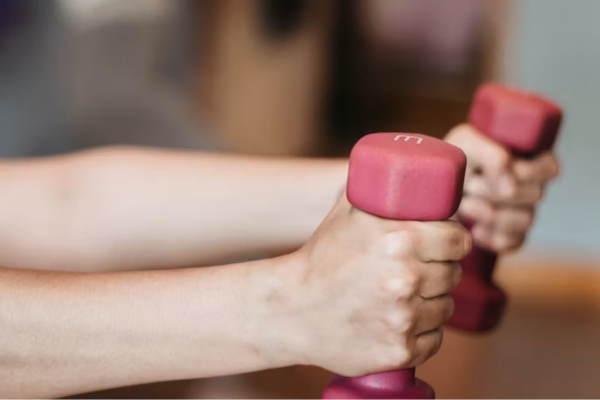
After hours in a pressurised cabin, your body is stiff, your circulation is sluggish, and your energy systems are flat. Light movement helps address all three, without requiring anything strenuous.
A 20 to 30 minute walk outdoors is ideal, particularly if you can do it in natural light, as it combines physical movement with circadian light exposure in a single step. Even light stretching or yoga in your room counts. Exercise promotes circulation, supports oxygen delivery to the brain, and releases endorphins, all of which directly reduce the brain fog that is one of jet lag's most persistent symptoms.
You do not need to push through a full gym session. Just move. Even a slow walk around the block at your destination is better than lying in a darkened room waiting for it to pass.
8. Optimise Your Sleep Environment
Your hotel room or new bedroom may not naturally be set up for quality sleep. Taking five minutes to prepare it properly makes a real difference when your body is already struggling to find its rhythm in an unfamiliar setting.
Key adjustments to make:
- Block out all light with blackout curtains or a sleep mask, particularly important in summer months when countries like the UK have very late sunsets and early dawns
- Keep the room cool, around 18 to 20 degrees Celsius, as cooler temperatures support deeper, more restorative sleep
- Use earplugs or a white noise app if the environment is unfamiliar or noisy
- Avoid screens for 30 to 60 minutes before bed, as blue light from phones and laptops actively delays melatonin release
- Avoid heavy meals or alcohol within two to three hours of sleeping
If you are travelling with family and trying to help children settle in an unfamiliar room, our guide on tips for travelling with kids has specific advice for helping little ones adjust to new sleep routines whilst you are away.
9. Use Caffeine Strategically, Not Constantly
Caffeine is a useful ally for staying alert during local daytime hours. But using it without any timing awareness is one of the most common mistakes that jet-lagged travellers make.
Caffeine stays in your system for approximately six hours. Drinking tea or coffee in the afternoon or evening directly delays your ability to fall asleep at night, which is precisely the opposite of what you need during jet lag recovery.
The rule is straightforward: use caffeine during local morning hours only, and avoid it after early afternoon, at minimum six hours before your planned local bedtime.
One study found that 300 mg of slow-release caffeine reduced daytime sleepiness in jet-lagged travellers without significantly disrupting their nighttime sleep, specifically because the timing was controlled. It was not the caffeine doing the heavy lifting. It was the timing.
10. Start Adjusting Your Sleep Schedule Before Your Next Trip
This is a preventive tip for future travel rather than your current recovery, but it is worth having in your toolkit.
Research shows that pre-adapting your sleep schedule by one hour per day for three to five days before departure significantly reduces jet lag severity after arrival. For eastward travel, go to bed one hour earlier each day in the days before your flight. For westward travel, shift one hour later per day.
Even a partial adjustment of two days is meaningfully better than no adjustment at all. It gives your body a running start before you even board. For more on preparing your body for long-haul travel, our guide to making international flights more comfortable covers in-flight strategies that complement your pre-departure preparation well.
11. Try a Jet Lag App for a Personalised Recovery Plan
Generic advice works well for most people most of the time. But a personalised plan built around your specific itinerary and chronotype, whether you are naturally a morning person or an evening person, can be considerably more effective.
A few well-regarded options:
- Timeshifter: Developed with input from leading circadian rhythm researchers. Provides hour-by-hour personalised guidance covering light exposure timing, melatonin windows, caffeine, and sleep, tailored to your specific flight details.
- Jet Lag Rooster: A free tool. Enter your departure and arrival cities, your usual sleep times, and how many days you have before travel, and it generates a personalised adjustment plan.
- Entrain: Created by researchers at the University of Michigan. Uses mathematical circadian models to calculate the optimal adjustment sequence for your specific situation.
None of these replace the core strategies in this guide, but they are genuinely useful for frequent travellers or anyone facing a particularly demanding time zone crossing.
12. Be Patient With Yourself
No strategy eliminates jet lag instantly. Your circadian system is a biological process and it needs physical time to shift. The strategies above can cut your recovery window dramatically, but they do not erase the adjustment period entirely.
Give yourself grace during the first 48 hours. Do not schedule your most important meetings, events, or commitments on your first full day if you can avoid it. Accept that you will not feel completely sharp, and know that this is entirely normal.
Your body has just been transported across the planet at 900 kilometres per hour. It is doing its best. Let it catch up.
What Should You Eat and Drink to Support Jet Lag Recovery?
Diet plays a supporting role in jet lag recovery that many travellers overlook entirely. It is not the primary tool, but it is a meaningful one.
Foods and drinks that help:
- Water and electrolytes: Hydration is the priority above everything else. Coconut water and electrolyte sachets are useful on the first day after arrival, particularly in warm climates.
- Protein-rich meals in the morning: Protein supports neurotransmitter production and helps maintain alertness during local daytime hours.
- Complex carbohydrates in the evening: Foods like rice, oats, and whole grains support natural melatonin production and make it easier to fall asleep at a local bedtime.
- Small, easily digestible meals overall: Lighter portions are far easier on a digestive system that is already under circadian stress.
Foods and drinks to avoid:
- Alcohol: Disrupts sleep quality and worsens dehydration. Avoid it for the first one to two days at minimum.
- Caffeine after early afternoon: Fine in the mornings, counterproductive later in the day.
- Heavy or unfamiliar foods: These worsen the digestive symptoms that often accompany jet lag.
- High-sugar snacks: Blood sugar spikes and crashes add instability to energy levels that are already erratic from circadian disruption.
Does It Matter Whether You Flew East or West?

Yes, considerably.
Eastward travel is harder for roughly 75% of travellers, according to research from Stanford University. Flying east shortens your day and forces your body to fall asleep earlier than its natural rhythm wants. Westward travel extends the day, which aligns more naturally with the body's slightly-longer-than-24-hour internal cycle.
Recovery rates reflect this asymmetry. Eastward travel typically requires about 1.5 days of recovery per time zone crossed. Westward travel is closer to one day per time zone.
For travellers from Bangladesh, this plays out like this:
- Dhaka to Bangkok or Singapore (eastward, 1 to 2 time zones): Recovery typically within 2 to 3 days
- Dhaka to Dubai (westward, 2 time zones): Recovery typically within 2 to 3 days
- Dhaka to London (westward, 5 to 6 time zones): Recovery typically 5 to 7 days
- Dhaka to New York or Los Angeles (westward, 10 to 11 time zones): Recovery can take 10 to 12 days
The 12 tips above apply regardless of direction, but the specific timing of light exposure (Tip 2) and melatonin (Tip 4) differs based on which way you flew, so pay particular attention to those directional notes.
Whether you are heading out on your first solo international adventure or returning somewhere familiar, our solo travel guide has useful preparation advice that pairs well with everything covered here.
When Should You See a Doctor About Jet Lag?
For most travellers, jet lag is a temporary inconvenience that resolves without any medical intervention. You generally do not need to visit a doctor for standard jet lag.
That said, there are situations where a professional conversation is appropriate:
- Symptoms persist for longer than two weeks without meaningful improvement
- You experience severe or prolonged mood changes, persistent low mood, or signs of depression following travel
- Your sleep problems do not improve after the first week and are significantly disrupting your daily functioning
- You have a pre-existing heart condition, as the physiological stress of long-haul travel combined with circadian disruption can carry additional risks for certain individuals
- You are a frequent flyer, such as a pilot, flight attendant, or regular business traveller, experiencing recurring sleep disruption that does not resolve between trips
If any of the above apply to you, speak to your GP.
For more broadly useful guidance on staying well while you travel, our tips for safe travel covers health and safety considerations that go beyond jet lag.
Please note: The information in this article is for general informational purposes only and is not a substitute for professional medical advice. Always consult a qualified healthcare provider for any health concerns related to travel.
Frequently Asked Questions
How long does jet lag last after an international flight?
Jet lag typically lasts about one day for every time zone crossed. Westward travel is generally easier, with recovery closer to one day per time zone. Eastward travel takes around 1.5 days per time zone. Most travellers feel significantly better within three to seven days, though sleep timing and quality can take over a week to fully normalise, particularly after eastward flights.
What is the fastest way to recover from jet lag after travel?
The fastest recovery combines timed light exposure, local meal scheduling, and low-dose melatonin at bedtime. Seek morning sunlight after eastward flights and evening light after westward ones. Stay well hydrated, avoid alcohol, keep naps under 30 minutes, and commit fully to local time on arrival. Combining these strategies works considerably better than relying on any single approach alone.
Does melatonin actually help with jet lag?
Yes, when used correctly. A comprehensive review of ten clinical trials found that melatonin significantly reduced jet lag symptoms when taken close to the target local bedtime at the destination, particularly after flights crossing five or more time zones. A dose of 0.5 mg to 3 mg is sufficient, and timing matters considerably more than the dose amount.
Should you sleep on the plane to reduce jet lag?
It depends on your arrival time. If you are landing at night at your destination, sleeping on the flight helps you arrive rested and ready to sleep again at a normal local hour. If you are arriving during the day, it is generally better to stay awake on the plane and push through to a reasonable local bedtime after landing, which helps your body sync to the new time zone faster.
Is jet lag worse flying from Dhaka to Europe or to the USA?
Both involve significant time zone differences, but very different in scale. Flights from Dhaka to London cross roughly five to six time zones westward. Flights to the USA cross ten to eleven. The USA route involves roughly twice the circadian disruption and requires a proportionally longer recovery period. Both are westward journeys from Dhaka, so the evening light and later-schedule adjustment strategies for westward travel apply in both cases.
Ready to Plan Your Next International Trip?
Jet lag is your body's entirely honest response to being transported across the globe faster than biology was ever designed to handle. It is temporary, it is manageable, and with the right approach, you can get through it in far less time than most people expect.
The strategies in this guide are grounded in real circadian science, backed by the CDC, the Sleep Foundation, Harvard Health, and the American Academy of Sleep Medicine. None of them require expensive products or complicated routines. They just require awareness and a willingness to work with your body rather than push through it blindly.
When you are ready to start planning your next adventure, head to our travel tips section for more guides to help make every journey smoother. And if your next trip is already taking shape, you can search and book flights directly through ShareTrip for the best fares on routes from Dhaka to Dubai, Singapore, Bangkok, London, and beyond.
Safe travels, and here is to landing refreshed.


